
Industry News
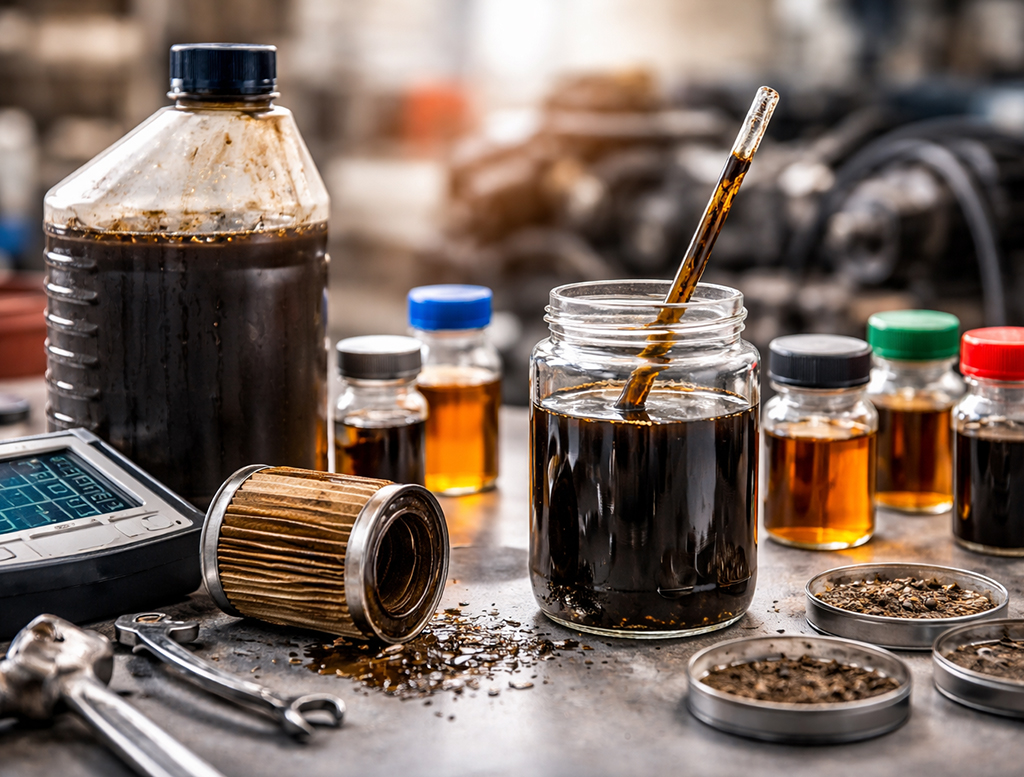
One of the most persistent mistakes in lubrication practice is treating oil changes as a calendar event rather than a condition-based decision. Oil does not become unfit for service simply because a certain number of hours or months have passed. The correct change point is reached when the lubricant can no longer perform its required functions with an adequate safety margin. In practice, that means evaluating oil condition, contamination level and machine wear together, not relying on a fixed interval alone.
The better question is: What evidence shows the oil is still fit for service? Fixed drain intervals are simple, but they are often either too conservative or too risky. Condition-based oil changes are built around test data, trending and application severity. In many systems, oil life can be safely extended when analysis confirms that the base oil, additive system and cleanliness level remain within acceptable limits.
A sound used oil analysis program answers three questions:
That framework is central to professional oil analysis because an oil change should not be triggered by one number in isolation. It should follow from a clear understanding of whether the lubricant has chemically degraded, whether contamination is overwhelming the system, or whether the machine is generating wear that the oil can no longer manage effectively.
Oil should generally be changed when one or more of the following conditions is confirmed by analysis and trend data.
1. Viscosity has moved out of range
Viscosity is the lubricant’s most important physical property because it determines film thickness and load-carrying behaviour. A significant rise may indicate oxidation, soot, incorrect top-up oil or insoluble contamination. A drop may suggest shear, fuel dilution or thermal cracking. Once viscosity drifts beyond acceptable limits for the application, the oil may no longer protect the machine properly, even if it still looks clean.
2. Acid number is rising beyond normal trend
For many industrial oils, acid number is one of the clearest indicators of oxidation and lubricant degradation. A rising acid number can result from oxidation by-products, acidic contamination or additive depletion effects. It is most valuable when trended over time rather than judged from a single sample. If acid generation is accelerating, the lubricant may be approaching the end of its useful life.
3. Base number is depleted in engine oils
In engine oils, the base number tracks the alkaline reserve available to neutralise acidic combustion by-products. As that reserve declines, the oil becomes less capable of controlling corrosive conditions. One reference notes that acid number often begins to climb as base number depletion reaches around 50 percent, and that significant depletion should be watched closely when optimising drain intervals.
4. Oxidation, nitration or additive depletion shows the oil is chemically exhausted
FTIR and related condition tests can show whether the lubricant is oxidising, nitrating or losing additive performance. These are important end-of-life signals because even if viscosity has not yet shifted dramatically, the oil may already be chemically unstable or functionally depleted. In other words, some oils fail chemically before they fail visually.
5. Contamination cannot be controlled economically
Sometimes the oil itself is still serviceable, but the contamination load is not. Water ingress, dirt entry, fuel dilution or coolant contamination can force an oil change if the contamination source cannot be corrected quickly enough or removed effectively through filtration, dehydration or maintenance action. In condition-based programs, it is common to correct contamination first and avoid changing the oil unless the fluid has also been permanently damaged.
6. Wear is rising in a way that points to system distress
Used oil analysis is not only about the fluid. If wear metals, ferrous debris or particle counts rise abnormally, the first response should be to investigate the machine, not automatically discard the oil. However, if the oil has lost its protective properties or contamination is driving the wear event, an oil change may become part of the corrective action.
An oil change is often unnecessary when the oil remains within target viscosity, oxidation is under control, additive reserve is adequate, and contamination is being effectively managed. In such cases, changing oil on time alone adds cost without improving reliability. Condition-based change strategies have been shown to avoid multiple unnecessary oil changes and reduce both lubricant and labor costs when backed by disciplined testing and interpretation.
A practical used oil analysis program for drain interval decisions often includes:
The exact test slate should match the machine type, lubricant formulation and failure modes. A gearbox, diesel engine, compressor and hydraulic system should not all be judged by the same condemning limits.
Atlas Lab provides used oil analysis designed to support condition-based oil changes, not guesswork. By evaluating lubricant health, contamination and machine wear together, our testing helps determine whether the oil should remain in service, be reclaimed through corrective action, or be changed before reliability is compromised.
For plants, fleets and marine operators, this approach improves lubricant utilisation, reduces unnecessary oil drains and supports better maintenance decisions with defensible data.
Reach out to Atlas Lab to build a used oil analysis program that helps you change oil at the right time.
Phone :+91 9324631646
WhatsApp : +91 9324631646
Email : contact@atlaslab.in

The cement industry operates under some of the harshest conditions in industrial manufacturing. Equipment such as rotary kilns, vertical roller mills,
Read more about Lube Oil Testing for the Cement Industry
The steel industry operates some of the most demanding and high-load machinery in the industrial sector. Equipment such as blast furnaces,
Read more about Lube Oil Testing for the Steel Industry