Industry News
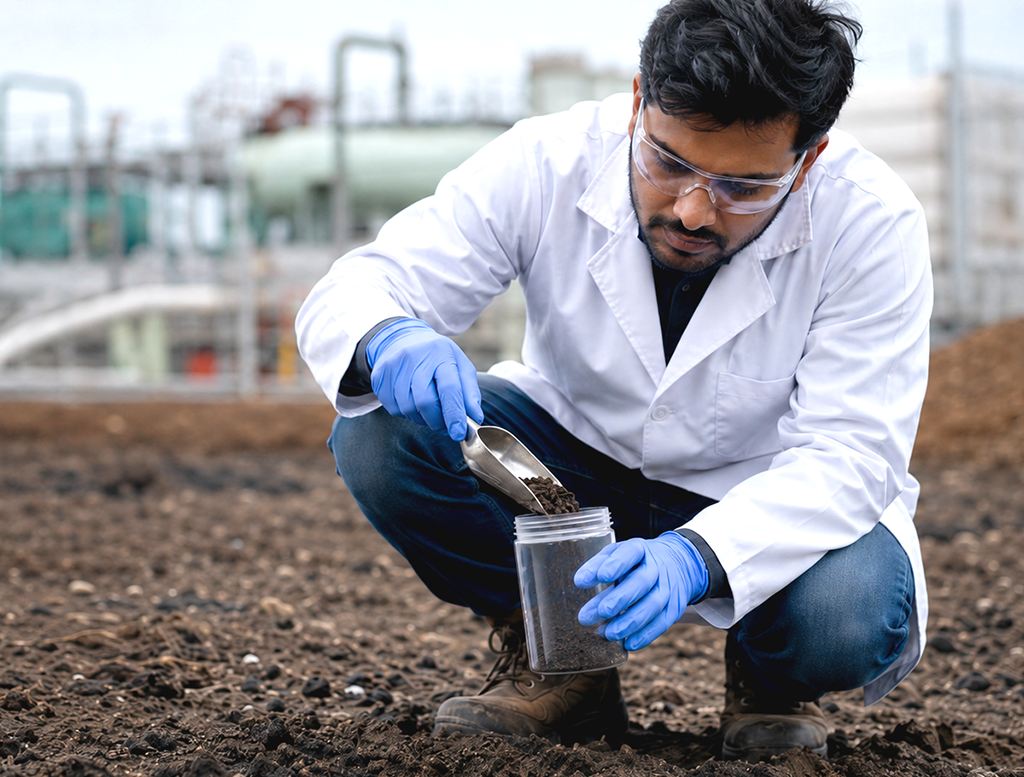
PFAS and PFOS testing for soil is becoming increasingly important for industries, ports, airports, refineries, shipyards, landfills, fire training grounds and environmental consultants. These chemicals are persistent, difficult to break down and can remain in soil for many years after they are released into the environment.
PFAS, or per- and polyfluoroalkyl substances, are often called “forever chemicals” because of their stability in soil, water and sediment. PFOS and PFOA are two of the most widely known PFAS compounds. They have been used in firefighting foams, industrial coatings, stain-resistant materials, water-resistant products, plating chemicals, surfactants and many other industrial applications.
When PFAS enters soil, it can become a long-term environmental concern. It may remain close to the source area, move with stormwater, migrate into groundwater, or accumulate in sediments and drainage channels. This is why PFAS testing in soil is an important part of environmental due diligence, site investigation, remediation planning and industrial risk assessment.
Soil often acts as the first point of contamination. If firefighting foam has been used on a site, if industrial wastewater has leaked into the ground, or if contaminated waste has been stored or disposed improperly, PFAS may remain in the soil long after the original activity has stopped.
Routine soil testing may include pH, moisture, heavy metals, hydrocarbons, oil and grease, pesticides or other contaminants. However, standard soil testing does not identify PFAS, PFOS or PFOA unless they are specifically included in the testing scope. PFAS testing requires specialised sample handling and advanced analytical methods, usually involving LC-MS/MS.
For industrial and infrastructure sites, PFAS soil testing helps answer important questions. Is the land contaminated? Has PFAS migrated from the source area? Is groundwater at risk? Can the soil be excavated or reused? Does the site require remediation? Is the contamination linked to firefighting foam, landfill leachate, wastewater discharge or historical industrial activity?
These answers matter before land transfer, redevelopment, construction, environmental audit, waste disposal or regulatory review.
PFAS contamination in soil is often linked to historical or current site activities. One of the most common sources is AFFF firefighting foam, especially where foam has been used for fire training, emergency response, fire system testing or foam storage tank cleaning.
Other possible sources include industrial wastewater leakage, landfill leachate, chemical storage areas, sludge disposal, contaminated stormwater runoff, textile and coating operations, metal plating, refineries, airports, ports, shipyards, oil terminals and waste treatment facilities.
Because PFAS compounds are highly mobile in certain conditions, soil contamination should not be viewed in isolation. A contaminated soil zone may also affect groundwater, nearby drains, surface water, sediment or vegetation.
Atlas Lab supports PFAS, PFOS and PFOA testing across different soil and land investigation samples. The testing scope can be selected based on the site history, suspected source, industry type and reporting requirement.
PFAS soil testing requires careful sampling and contamination control. Sample containers, gloves, field materials, labels and handling procedures should be selected carefully to avoid cross-contamination. The laboratory method must be sensitive enough to detect PFAS compounds at trace levels and suitable for complex soil matrices.
In many cases, the testing scope may include PFOS, PFOA, PFHxS, PFNA, PFBS, PFHxA, PFHpA, PFDA and other PFAS compounds depending on the requirement. A broader PFAS panel is often useful because soil contamination may involve multiple PFAS compounds, not just PFOS or PFOA.
PFAS soil testing is not only about detecting a compound. It is about understanding site risk. Different sites need different testing strategies. A fire training ground may require source-area testing. A refinery may need soil, stormwater and firewater runoff testing together. A landfill may need soil, leachate and groundwater testing. A port or shipyard may need soil, wastewater, sediment and foam-contaminated water testing.
Atlas Lab helps clients select the right sample locations, testing scope and reporting approach for PFAS soil testing, PFOS testing, PFOA testing, contaminated land testing, landfill soil testing, fire training ground soil testing, airport soil testing, refinery soil testing, port soil testing, shipyard soil testing and industrial site soil testing.
Our focus is to provide accurate testing, clear reporting and practical technical support so customers can make informed decisions on compliance, disposal, remediation and environmental risk.
If your site has used firefighting foam, handled industrial chemicals, managed wastewater, operated near a landfill, refinery, port, shipyard, airport or fire training area, PFAS testing for soil should be part of your environmental assessment.
Contact Atlas Lab for reliable PFAS, PFOS and PFOA testing for soil, sediment, contaminated land, industrial sites and environmental investigations.
Phone :+91 9324631646
WhatsApp : +91 9324631646
Email : contact@atlaslab.in
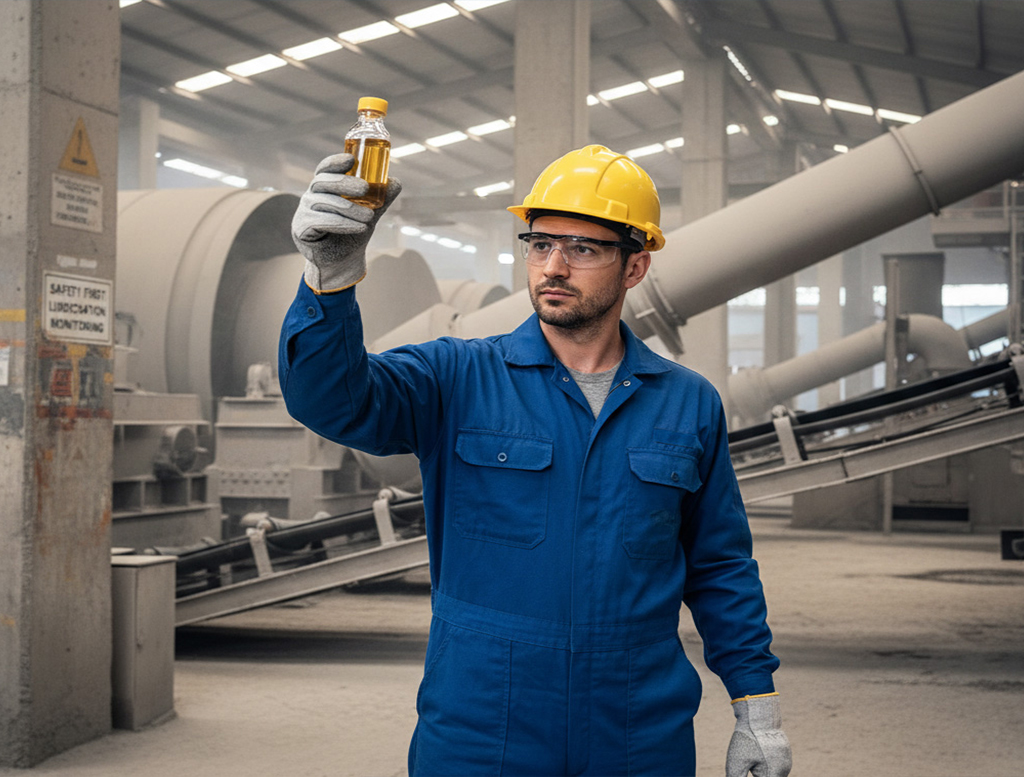
The cement industry operates under some of the harshest conditions in industrial manufacturing. Equipment such as rotary kilns, vertical roller mills,
Read more about Lube Oil Testing for the Cement Industry
The steel industry operates some of the most demanding and high-load machinery in the industrial sector. Equipment such as blast furnaces,
Read more about Lube Oil Testing for the Steel Industry